
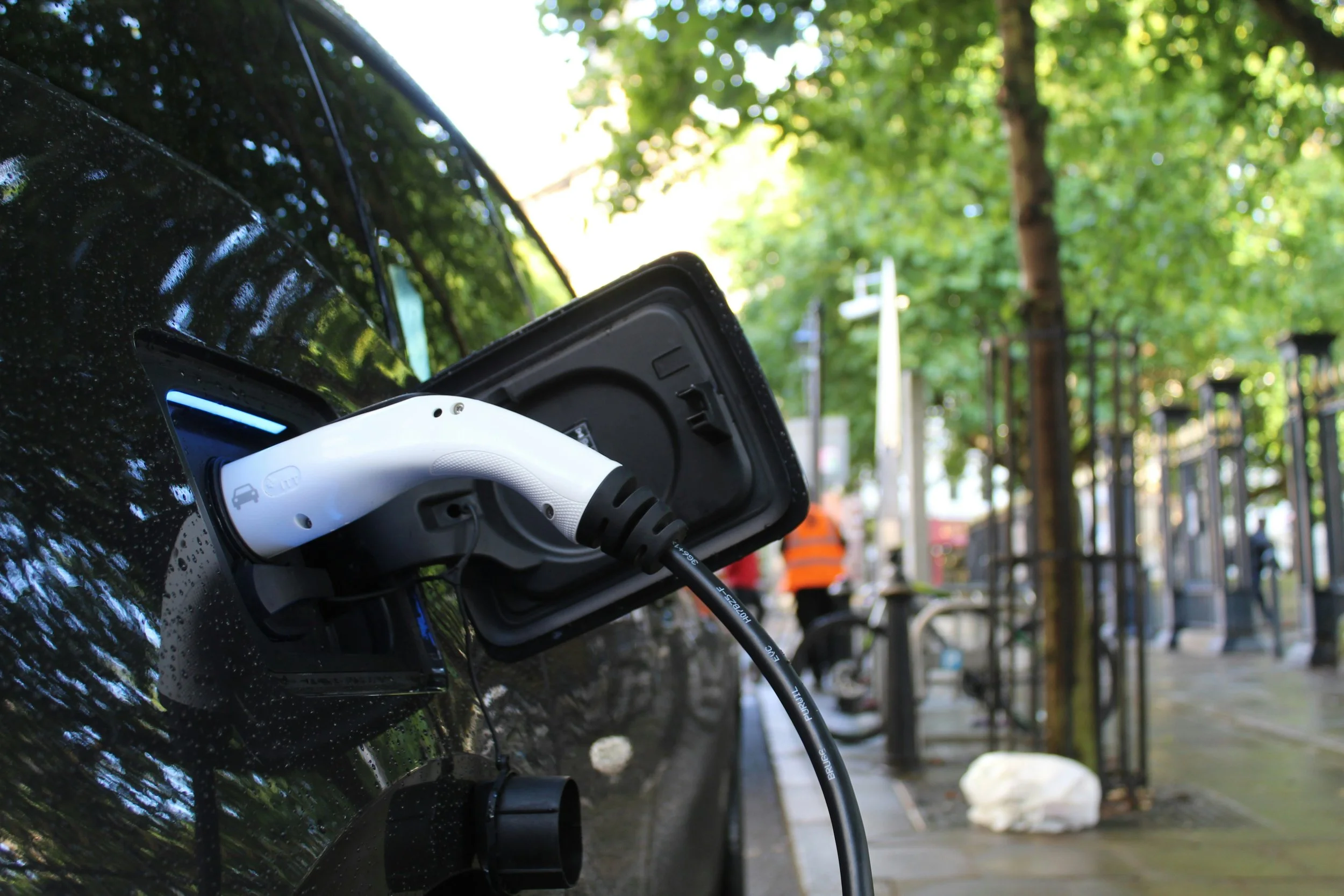
EV Charger Installation Melbourne
Licensed Installers for Home and Commercial EV Charging Across Melbourne
Bitz Electrical installs home and commercial EV chargers across Melbourne, handling everything from dedicated circuit installation and switchboard assessment through to compliant handover and certification for all major electric vehicle brands.
We specialise in Melbourne's north eastern corridor, covering suburbs across Banyule, Nillumbik and Manningham. If you are looking for a local installer who knows the area, the housing stock, and the common switchboard configurations across the north east, you are in the right place.

Get a Free Quote
What Our Client Say
EV Charger Installation Across Melbourne's North East
Electric vehicles are now a common sight across Melbourne's north east, and how you charge at home matters more than most people expect. A standard power point is slow, draws more current than it was designed for, and is not the right long-term solution for a nightly EV charging load.
Bitz Electrical installs home and commercial EV chargers across Melbourne's north eastern suburbs. We assess your switchboard, confirm your supply type, and recommend the right charger for your vehicle and property. Every installation comes with a Certificate of Electrical Safety and our lifetime workmanship guarantee.
Serving Doncaster, Templestowe, Eltham, Greensborough, Ivanhoe, Rosanna, Warrandyte, Donvale, Montmorency, Watsonia, Macleod, Lower Plenty, Heidelberg, Bundoora and surrounding suburbs.
EV Charger Installation: What We Do
Home EV Charger Installation
Commercial EV Charger Installation
Apartment & Strata EV Charging
EV Chargers We Install
Tesla Wall Connector Installation
Zappi Solar EV Charger Installation
Wallbox EV Charger Installation
Evnex EV Charger Installation
Universal and Multi-brand EV Charger
The difference between a standard power point and a dedicated wall charger is significant in practice. Here is how the three main options compare for a typical 70kWh battery:
Home EV Charging Speeds: What the Numbers Look Like
| Charging Method | Output | Charge Time (70kWh Battery) |
|---|---|---|
| Standard power point (10A) | 2.4kW | 24–30 hours |
| 7kW Type 2 wall charger (single phase) | 7kW | 8–10 hours |
| 22kW wall charger (three phase) | 22kW | 3–4 hours |
Most Melbourne homes are single-phase, so a 7kW wall charger is the standard recommendation. If your property has three-phase supply, a 22kW option is available and charges significantly faster. We confirm your supply type as part of every assessment before making a recommendation.
This is the step that catches people out when they get quotes elsewhere. An EV charger draws a sustained high load, more than almost anything else connected to your home, and your switchboard needs to handle it safely before installation can proceed.
We assess your switchboard as part of every quote. We check for a spare circuit with adequate capacity, confirm your RCD protection is compliant with AS/NZS 3000, and identify whether any upgrades are required before we start. Many Melbourne homes built before 2000 have boards that need attention: older boards with limited spare capacity, missing safety switches, or ceramic fuses are not suitable for the load a charger adds.
If your board needs work, we include it in the quote from the start. No surprises on the day, no second invoice, no need to book a separate electrician. We handle both in a single visit.
Do I Need a Switchboard Upgrade for an EV Charger?
Not necessarily. Many homes have a spare circuit with sufficient capacity and need no board work at all. Properties built before the late 1990s more commonly require attention. We assess this at the quoting stage and give you a clear answer before any commitment is made.
Single Phase vs Three Phase EV Charging
The speed of your home charging depends on whether your property has single-phase or three-phase power supply. Most Melbourne homes are single-phase, which supports up to 7kW. Properties with three-phase supply can run a 22kW charger and charge in roughly a third of the time. We confirm your supply type during the assessment. → Explore Switchboard Upgrade Options
Switchboard Assessment Included With Every Install
EV Charger Mounting and Installation Options
We install wall-mounted and post-mounted chargers across a range of property types. Cable routing is planned before installation starts and we work to keep the finish tidy, minimising visible conduit where the installation allows. Single and double garages, carports, external walls and freestanding post-mounted units for driveways and commercial sites are all setups we handle regularly.
EV Charging and Solar: Getting More From Your System
If your property has solar panels, a solar-compatible charger such as the Zappi can be configured to prioritise charging from excess solar generation rather than drawing from the grid. The charger monitors your solar output in real time and diverts surplus energy that would otherwise be exported at a low feed-in tariff directly into your vehicle.
For households with a decent-sized solar system, the saving over time is meaningful. The more you drive and the more surplus your system generates during the day, the more you benefit. We advise on which chargers support solar integration and whether the setup makes sense for your usage pattern as part of the quote process.
EV Charger Installation Cost in Melbourne
Most residential EV charger installations across Melbourne's north east fall in the range of $800 to $1,800 depending on the scope of work involved. The main variables are:
The charger being installed
Distance from the switchboard
Available electrical capacity
Whether a switchboard upgrade is required
Single phase or three phase supply
Cable access and installation complexity
If your property has a modern switchboard with a spare circuit close to where the charger will be installed, the job is at the lower end of that range. Older properties with ceramic fuse boards, long cable runs, or three-phase work involved will be higher.
We give you a fixed upfront quote covering all the work before anything starts. Call 1300 215 193 or use the form below to arrange a quote.
Do I Need a Switchboard Upgrade?
Some older homes may require upgrades to safely accommodate an EV charger. Learn more about switchboard upgrades →
Single Phase vs Three Phase Charging
The charging speed available will depend on your electrical supply and charger selection.
The EV Charger Installation Process
Commercial EV Charger Installation, Melbourne’s North East
The shift toward EV fleets, staff charging, and customer charging amenities is accelerating. Businesses that build charging infrastructure now are ahead of where they will need to be within a few years.
We install commercial EV charging solutions across Melbourne's north east for offices, car parks, strata buildings, warehouses, and fleet operators. Commercial installations involve considerations that do not apply to residential work: load management across multiple bays, compliance with AS/NZS standards for commercial electrical work, metering arrangements for staff or customer reimbursement, and circuit sizing that accommodates future expansion without costly rework.
If you are planning commercial EV infrastructure, involve us early. The decisions made at the planning stage, including circuit layout, cable routes, and load capacity, directly affect what it costs to scale later.
EV Charger Installation Across Melbourne's North and Inner East
We install EV chargers regularly across Melbourne's north east, covering the Banyule, Manningham, Nillumbik and Whittlesea corridors, and west into Darebin and across the river into Boroondara. The suburbs below are part of our regular run. If you're in the area and looking for a local electrician who knows it, give us a call or use the form below.
Banyule
Manningham
Nillumbik
Whittlesea
Boroondara
Not on the list? We install throughout the suburbs surrounding those above, right across Melbourne's north and inner east. Call us on 1300 215 193 and we'll confirm we cover you.

Get a Quote for EV Charger Installation in Melbourne
Tell us what you need and we'll provide a written quote with no obligation. Most enquiries hear back from us the same day, and every residential visit includes a free electrical safety inspection.
Call 1300 215 193 or send us a message.
Get a Free Quote
EV Charger Installation Melbourne: Frequently Asked Questions
Cost and Quoting
How much does EV charger installation cost in Melbourne?
Most residential installations in Melbourne's north east fall between $800 and $1,800. The range depends on the charger type, cable run distance, whether a switchboard upgrade is required, and your supply type. You receive a written quote with no variations before any work starts. Call 1300 215 193 for a no-obligation quote.
How much does it cost to charge an EV at home?
Charging at home is substantially cheaper than using public fast chargers. A typical 60kWh battery takes roughly 55 to 60kWh to fill from near empty, so at a Victorian off-peak rate of around 20 cents per kWh that is about $11 to $12 for a full charge, or close to $3 if you are charging from surplus solar. Public DC fast chargers commonly cost three to four times as much per kWh. Rates vary by retailer and tariff, so check your own plan.
Does the distance from the switchboard affect the cost?
Yes, and it is one of the largest variables in the price. A charger mounted on a garage wall within a few metres of the board is the cheapest scenario and usually sits at the lower end of the range. Runs to a detached garage, a carport on the far side of the house, or across a driveway need heavier cable and sometimes underground conduit or trenching, which can add several hundred dollars. We measure the shortest practical route during the assessment and include it in the written quote.
Are there rebates for EV charger installation in Victoria?
There is currently no Victorian or federal rebate for installing a home EV charger. Victoria's zero emissions vehicle subsidy applied to vehicle purchases and ended on 30 June 2023, and Solar Victoria rebates cover solar, batteries and hot water rather than chargers. Some electricity retailers offer EV-specific tariffs or bill credits, and commercial and fleet installations may qualify for separate programs. Incentives change, so confirm current offers with your retailer before you commit.
Do you need to inspect the property before quoting?
Yes, for a firm price. We can give a general indication of cost over the phone, but confirming the quote means seeing your switchboard and walking the cable route. For most properties in Melbourne's north east we can schedule an assessment within a few days. Call 1300 215 193 to arrange a time.
Your Property and Power Supply
Do I need a switchboard upgrade before installing an EV charger?
Not necessarily. Many homes have a spare circuit with sufficient capacity and need no board work at all. Properties built before the late 1990s more commonly need a new circuit or a full switchboard upgrade, particularly where the board still has ceramic fuses or no RCD protection. We assess this as part of every quote and include any required work in the written quote.
Do I need three-phase power for an EV charger?
No. The great majority of Melbourne homes run single-phase supply, and a 7kW single-phase charger adds roughly 40km of range per hour, which fills most batteries overnight. Three-phase supply allows a 22kW charger, cutting charge times to about a third, but only some vehicles accept 22kW AC and upgrading a property from single to three-phase is a significant cost. We confirm your supply type during the assessment and tell you plainly whether the upgrade is worth it.
Can I charge my EV from a normal powerpoint?
You can, using the portable cable supplied with the vehicle, but it is a fallback rather than a solution. A standard 10 amp powerpoint delivers around 2.4kW, roughly 10 to 15km of range per hour, so a full charge can take more than 24 hours. Drawing that load continuously through an older or shared circuit also generates heat, which is why we do not recommend it as a daily habit. A dedicated charger on its own circuit is both faster and safer.
Does the electricity distributor need to be notified about an EV charger?
Sometimes, and it is a step most homeowners do not know exists. Victorian distributors, including AusNet Services and Jemena which between them cover most of Melbourne's north east, may require notification or approval before a dedicated EV charger circuit is energised, particularly where the charger exceeds 7kW or the local supply is constrained. Your electrician handles this, not you. We identify your distributor and confirm available supply capacity during the assessment, so there are no surprises after the charger is on the wall.
Can I install an EV charger in a rental property?
Yes, with the owner's written consent, since a hardwired charger is a permanent alteration to the property. In practice most tenants either negotiate with the landlord to have the charger remain at the end of the lease, or the owner funds the installation as an improvement. If consent is not forthcoming, a portable charger on an existing powerpoint is the interim option. We are happy to provide a written quote you can send to the owner or agent.
Can I charge two EVs at once?
Yes, but the household supply usually needs managing. Most Melbourne homes have a main supply fuse rated at 63 or 80 amps, and two 32 amp chargers running at full output alongside an oven, air conditioner and hot water can exceed it. The solution is dynamic load management, where the chargers communicate and share available capacity, throttling back rather than tripping the main. We size this during the assessment. It is the same principle we apply to multi-bay commercial installations.
Choosing the Right Charger
What type of EV charger should I get for my home?
For most Melbourne homes, a 7kW Type 2 wall charger is the right choice. It is compatible with virtually all EVs sold in Australia, delivers a full overnight charge for most vehicles, and works on standard single-phase supply. If your property has three-phase power, a 22kW charger charges significantly faster. If you have solar, a Zappi is worth considering. Tell us your vehicle and we will give you a straight recommendation.
How long does it take to charge an EV at home?
On a 7kW charger, a typical 60kWh battery goes from near empty to full in about eight to nine hours, which is comfortably overnight. In everyday use most drivers top up rather than fully charge, adding roughly 40km of range for every hour plugged in. A 22kW charger on three-phase supply cuts a full charge to around three hours, though only some vehicles accept that rate on AC. A standard powerpoint, by contrast, can take more than 24 hours.
Tethered or untethered charger, which is better?
A tethered charger has the cable permanently attached, so you plug straight in without handling a separate lead, which suits most single-EV households. An untethered charger has a socket instead, so you bring your own cable. It looks tidier on the wall, it accommodates vehicles with different connectors, and it is more future-proof if you change cars. Untethered units also avoid replacing the whole charger if a cable is damaged. Both are Type 2 in Australia, so either works with virtually any EV.
Which EV charger brands do you install?
We install customer-supplied chargers and can supply units directly. Brands we regularly install include Tesla Wall Connectors, Zappi, Evnex, Wallbox, Ocular, ZJ Beny, and Fronius Wattpilot. If you have a specific charger in mind, contact us to confirm compatibility with your vehicle and property.
Do you install chargers for Tesla, BYD, Kia and other EVs?
Yes. We install chargers for every EV sold in Australia, including Tesla Model 3 and Model Y, BYD Atto 3 and Seal, Kia EV6, Hyundai Ioniq 5 and 6, MG ZS EV, Volvo EX40, Polestar 2, Mitsubishi Outlander PHEV, Mercedes EQA and EQC, BMW iX and i4, and Audi Q4 e-tron. All of these use the Type 2 connector standard, so charger choice is driven by your supply and your charging habits rather than by the badge on the car.
Can my EV charger integrate with my solar system?
Yes, if you choose a solar-compatible charger such as the Zappi. It monitors your solar output and prioritises excess solar generation for charging before drawing from the grid. The practical benefit depends on your solar system size and daily driving pattern, and it is greatest for households that can charge during daylight hours rather than overnight.
Installation, Compliance and Coverage
Where should an EV charger be mounted?
Mount it where the car parks and where the cable reaches the charge port without stretching across a walkway. A garage wall close to the switchboard is ideal. Most chargers are weatherproof and rated for outdoor installation, so a carport wall, a side fence line or an external wall beside the driveway all work. Height is typically between 900mm and 1200mm from the ground, which keeps the connector easy to handle and the cable clear of the ground.
How long does EV charger installation take?
Most residential installations are completed in a single visit of three to six hours. If a switchboard upgrade is also needed, allow a full day. Long cable runs, trenching or three-phase work can extend this. We give you a clear timeframe with the quote.
Does an EV charger need its own circuit and RCD?
Yes to both. An EV charger draws a sustained high load for hours at a time, so AS/NZS 3000 requires a dedicated circuit run from the switchboard rather than a shared one, along with correct RCD or RCBO protection and a verified earth connection. Where a charger does not include built-in DC fault detection, a Type B RCD is required. A Certificate of Electrical Safety is issued on completion, which is your evidence the installation is compliant.
What size cable and circuit breaker does a 7kW charger need?
A 7kW single-phase charger draws 32 amps, so it is protected by a 32 amp RCBO and typically fed with 6mm squared cable, though the exact size depends on the run length, installation method and derating factors under AS/NZS 3000. Longer runs sometimes need 10mm squared to keep voltage drop within limits. This is why cable route matters to both the price and the specification, and why the sizing is calculated for your property rather than assumed.
Can I install an EV charger myself?
No. EV charger installation is regulated electrical work and must be carried out by a licensed electrician in Australia. A DIY installation is illegal, will void your charger's warranty, may not be covered by your home insurance, and creates a genuine fire and safety risk given the sustained high load involved.
Are you licensed, and what warranty do you offer?
Bitz Electrical is a licensed electrical contractor, REC 31813, and a member of Master Electricians Australia. Jonathan has more than 25 years of experience in the electrical industry. Every installation is backed by our lifetime workmanship guarantee, which covers the work itself for as long as you own the property, and a Certificate of Electrical Safety is issued on completion. The charger hardware carries its own manufacturer warranty, typically three to five years.
Do you install EV chargers for businesses and strata buildings?
Yes. We handle commercial installations across Melbourne's north east including offices, car parks, strata buildings, and business fleets. Commercial work involves load management across multiple bays, coordination with owners corporations where common property is affected, and compliance with commercial electrical standards. Get in touch to discuss your requirements.
What areas do you service?
We service Melbourne's north and inner east across the Banyule, Manningham, Nillumbik, Whittlesea, Darebin and Boroondara council areas, including Briar Hill, Bulleen, Bundoora, Diamond Creek, Doncaster, Doncaster East, Donvale, Doreen, Eaglemont, Eltham, Eltham North, Fairfield, Greensborough, Heidelberg, Ivanhoe, Kew, Lower Plenty, Macleod, Mernda, Mill Park, Montmorency, Northcote, Park Orchards, Preston, Rosanna, South Morang, St Helena, Templestowe, Templestowe Lower, Thornbury, Viewbank, Warrandyte, Watsonia, Yallambie and surrounding areas. If you are unsure whether we cover your location, call 1300 215 193.