
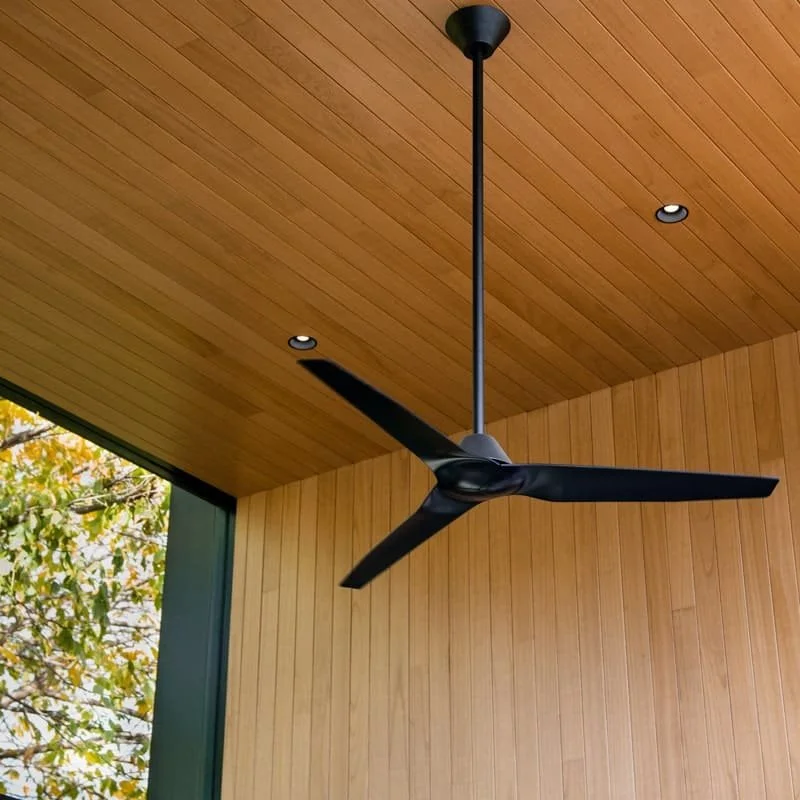
Ceiling Fan Installation Across Melbourne’s North East
New ceiling fans installed, old ones replaced, and fans fitted where there has only ever been a light. Bitz Electrical installs indoor, outdoor, DC and smart ceiling fans in homes and businesses across Eltham, Montmorency, Greensborough, Doncaster, Ivanhoe and surrounding suburbs.
 Master Electricians Member
Get a Free Quote
What our clients say
Ceiling Work We Handle
Choosing the Right Fan
If you have not bought a fan yet, the right choice depends on a few practical factors we assess on every job:
Room size and blade span: Small bedrooms generally suit fans around 120cm. Larger living areas need 130cm or more to move enough air. An undersized fan runs flat out and still disappoints.
Ceiling height: Blades must sit at a safe height above the floor. Standard 2.4m ceilings usually need a low-profile or hugger-style fan, while raked and high ceilings need an extension rod sized to bring the fan down to effective height.
Motor type: DC fans cost more to buy but use far less power, run near silent, and usually include a remote as standard. For a fan running all summer, the difference shows up on the bill.
Winter use: Most quality fans include a reverse function that pushes warm air back down from the ceiling in winter. Used with heating, it makes the room warm faster and lets you run the heater lower.
Lights and controls: Fan-with-light combinations suit rooms where the fan replaces the only light fitting. Controls can be wall-mounted, remote or app-based, and we wire whichever suits how you use the room.
We install fans from established brands and will give you a straight answer on which models hold up and which do not.
Replacing an Old or Failing Fan
Replace your ceiling fan if you notice any of the following:
Wobbling that balancing has not fixed, which can indicate a worn mount or bent blades
Grinding, clicking or humming from the motor
Speeds that no longer work, or a fan that needs a push to start
Sparking, burning smells or scorch marks at the fitting
An old timber-blade fan installed outdoors, where humidity warps the blades over time
Replacement is usually a quick job when the cabling is sound, and every residential visit includes a free visual safety inspection, so if the switch, cabling or fitting needs attention, you will know before it becomes a problem.
Ceiling Fans in North East Melbourne Homes
Homes across Eltham, Montmorency, Greensborough, Heidelberg and Ivanhoe were largely built between the 1950s and 1980s, before ducted cooling was common, and many still rely on a single split system or evaporative unit. Ceiling fans are the cheapest way to make the rest of the house liveable through summer, and in winter the reverse function helps heating reach further for less.
Older homes bring their own installation questions: ceiling joists that need a proper structural fixing rather than a plasterboard anchor, original light circuits that need checking before they take a fan and light combination, and switchboards without safety switches. We assess all of this before quoting, and where new circuits are required they are RCD protected. You receive a Certificate of Electrical Safety for all prescribed work.
How We Work
Ceiling Fan Installation Across Melbourne's North East
Bitz Electrical installs, replaces and upgrades ceiling fans for homes and businesses across Melbourne's north east. Find your suburb below, or call 1300 215 193 for a written quote.

Ready for a Cooler Summer and a Cheaper Winter?
Tell us which rooms need fans and we will provide a written quote with no obligation. Most enquiries hear back from us the same day, and every residential visit includes a free electrical safety inspection.
Call 1300 215 193 or send us a message.
Get a Free Quote
Ceiling Fan Installation in Melbourne: FAQs
How much does ceiling fan installation cost in Melbourne?
It depends on whether there is an existing fitting, the fan model, the ceiling height and access, and whether the switching or cabling needs upgrading. A like-for-like replacement on sound wiring is the most affordable option, while a first-time installation that needs new cabling, a switch and a structural fixing point costs more. We give you a written quote before any work begins, and the price does not change once work is underway, with no variations on the day. Installing several fans on the same visit reduces the cost per fan.
Do I need a licensed electrician to install a ceiling fan, or can I do it myself?
In Victoria, connecting a ceiling fan to your fixed wiring is prescribed electrical work and must be carried out by a licensed electrician, so it is not a legal DIY or handyman job. Beyond the wiring, a fan needs a structural fixing that can carry its weight and constant movement, which a standard plasterboard light mount was never designed to do. Using a licensed electrician also means you receive a Certificate of Electrical Safety and keep your home insurance and any product warranty intact.
Can you install a fan where there is only a light, or no fitting at all?
Yes to both. Converting an existing light point to a fan or a fan-with-light combination is one of our most common jobs, and we confirm the ceiling fixing can take the weight and movement of a fan, check the circuit, and set up separate control of the fan and light where you want it. Where there is no fitting at all, we run new cabling from a suitable point, fit the switch or remote receiver, and mount to a structural fixing in the ceiling.
What size ceiling fan do I need for my room?
Blade span should match the room. As a rough guide, bedrooms and studies generally suit a fan around 120cm, standard living areas around 130cm, and large open-plan or high-ceilinged rooms 140cm or more, sometimes with two fans in a very long space. An undersized fan has to run flat out and still fails to move enough air, so getting the span right matters more than most people expect. We size the fan to the room when we quote.
How high does my ceiling need to be for a fan?
Australian wiring rules require the blades to sit at least 2.1m above the floor, and for good airflow around 2.3m to 2.7m is ideal. On a standard 2.4m ceiling that usually means a low-profile hugger fan mounted close to the ceiling, while higher ceilings take a standard mount or an extension rod to bring the fan down to an effective height. We work out the right mounting and rod length for your ceiling as part of the quote.
Can you install a ceiling fan on a raked, sloped or cathedral ceiling?
Yes. Raked and cathedral ceilings are common in north east homes and need a fan rated for the pitch, usually fitted with an angled mount and an extension rod sized to bring the blades down to a safe and effective height. We confirm the fan and downrod suit the angle before installing, so the fan hangs level and clears the slope. Not every fan handles a steep pitch, so send us the model and we will check it first.
Can you install a ceiling fan in a bathroom, laundry or other wet area?
Yes, provided the fan is rated for the location. Bathrooms and other wet areas are divided into zones under the wiring rules, and the fan must carry a moisture rating suited to the zone it sits in, which a standard indoor fan does not. We select and position a suitably rated fan and protect the wiring accordingly, so it is safe and compliant rather than a corrosion problem waiting to happen.
Are DC ceiling fans worth the extra cost?
Usually, yes. A DC motor fan uses roughly a third of the power of an equivalent AC fan, runs noticeably quieter, offers more speed settings, and typically includes a remote as standard. For a fan that runs through the night all summer, the energy saving is real, though an AC fan is still a sensible choice for a room used only occasionally.
Can you install smart, remote or app-controlled ceiling fans?
Yes. We install fans with handheld remotes, wall controls and app or voice control through systems like Google Home and Amazon Alexa, and we wire whichever suits how you use the room. Smart fans let you set schedules, adjust speed from your phone and link the fan to other smart devices. We will also give you a straight answer on which smart features are genuinely useful and which are not worth paying for.
Why does my ceiling fan wobble, and can you fix it?
A wobble is usually a balance issue, bent or dusty blades, a loose mounting, or a fixing that was never structural enough for the fan in the first place. A small wobble can often be balanced out, but a persistent wobble on an older fan can point to a worn motor bearing or a mount working loose, which is worth addressing before it damages the ceiling. We can rebalance, re-secure or replace the fan depending on what we find, and check the fixing is properly structural.
Can you replace my old ceiling fan, and do you take the old one away?
Yes. Swapping an old, noisy or failed fan for a current model is quick work when the cabling is sound, and we remove and dispose of the old unit for you. It is also a good moment to check the fixing and switching, and every residential visit includes a free visual safety inspection, so you will know if the cabling or switch needs attention before it becomes a problem.
Can ceiling fans be installed outdoors, on a pergola or alfresco?
Yes, provided the fan is rated for outdoor use. Standard indoor fans, especially timber-blade models, warp and deteriorate quickly in outdoor humidity, so an outdoor-rated fan with a sealed motor and moisture-resistant blades is essential. We install weather-rated fans on pergolas, verandahs and covered alfresco areas, with the cabling and controls protected to suit the location.
Should I run my ceiling fan in winter?
Yes. Most quality fans have a reverse mode that turns the blades slowly the opposite way, pushing the warm air that pools at the ceiling back down into the room. Run alongside your heating, it warms the room faster and lets you set the heater lower, which cuts running costs. It is one of the most underused features on a modern fan.
How long does it take to install a ceiling fan?
A straightforward replacement on an existing fitting usually takes under an hour. A first-time installation that needs new cabling, a new switch or a structural fixing point typically takes two to three hours, depending on ceiling access. We give you a realistic timeframe with the written quote, and where you are having several fans done we schedule them together to save time and cost.
Can I supply my own fan, or do you provide it?
Either works. We can supply quality fans from established brands, or install a fan you have already bought. If you are supplying your own, send us the model and a photo of the ceiling before the visit, and we will confirm it suits the room size, the ceiling height and the mounting, and flag anything to be aware of before we arrive.
Can you install a ceiling fan in an older home with plaster ceilings?
Yes, and it is a large part of what we do across the north east. Homes built between the 1950s and 1980s often have ceiling joists that need a proper structural fixing rather than a plasterboard anchor, along with original light circuits that should be checked before they carry a fan and light combination. We assess the ceiling structure, the circuit and the switchboard before quoting, and where a new circuit is needed it is RCD protected.
Can you install fans for businesses and larger spaces?
Yes. We install ceiling fans for offices, shops, cafes, workshops and other commercial premises, including larger high-volume fans suited to warehouses and open areas with high ceilings. For big or high spaces we advise on the right fan size, mounting and number of units to move air effectively. All commercial work is completed to Australian standards with a Certificate of Electrical Safety for prescribed work.
Will I receive a Certificate of Electrical Safety?
Yes. A Certificate of Electrical Safety is issued for all prescribed electrical work, as required in Victoria, and ceiling fan wiring qualifies. We test the fan at every speed before we leave and you receive your certificate as formal documentation that the installation is safe and compliant.